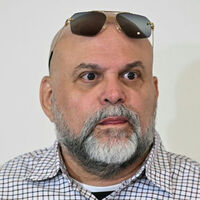



DENVER (CN) - A Colorado Springs family on Thursday asked the 10th Circuit to revive their lawsuit against the crisis response unit that put 63-year-old Kevin Dizmang into a fatal restraint while he was experiencing a mental health crisis.
"When you have an act as egregious as this, the court should not wait for a similar case to find this a constitutional violation," argued attorney Harry Daniels, on behalf of Dizmang's family.
"We're talking about a person who was showing signs of strained breathing and hypoxia, and a paramedic, someone who was trained to identify those issues, who instead wrapped his arm around his neck in a chokehold, resulting in death," Daniels said.
On Nov. 15, 2022, a crisis response unit for the Colorado Springs Police Department was called around 5 p.m. to help Dizmang, who struggled with PTSD and schizophrenia and was undergoing a mental health episode.
While Dizmang wasn't threatening anyone, his ex-wife told dispatchers he seemed suicidal.
Colorado Springs police officer Sean Reed, paramedic Nick Fischer and licensed clinician Andrea Alban arrived to find Dizmang walking into traffic and calling out "help." Dizmang did not comply with Reed's order to put his hands behind his back, and instead walked into a grove of trees, prompting Fischer to tackle him. Fischer then held Dizmang while Reed handcuffed him.
Although Dizmang was unresponsive and his pulse was faint, his family's attorneys say Fischer did not try to resuscitate him. At the hospital shortly before Dizmang was pronounced dead, Daniels said, Fischer laughed about the episode as being like a football tackle.
Led by Dizmang's daughter, his family sued in February 2024 claiming his Fourth Amendment right against unlawful seizures had been violated. After a federal judge dismissed the case in February 2025, Dizmang's family appealed, arguing the lower court "constructed its own narrative" and wrongfully found Fischer entitled to qualified immunity as a paramedic since he hadn't acted in a law enforcement role.
Chief U.S. District Judge Robert J. Shelby quizzed Daniels on whether the restraint could have been necessary for Fischer to render medical aid.
"What if as a paramedic, it's his view that there's someone who's not acting rationally, he's near a road, and [the paramedic's] using his medical judgment that he needs to be restrained?" the Barack Obama appointee asked.
Daniels acknowledged that paramedics can initiate a medical hold, but argued Fischer's restraint amounted to a seizure because it was carried out so Reed could put on handcuffs - a clear act of law enforcement, not of medical aid.
U.S. Circuit Judge Robert Bacharach pressed the paramedic's attorney, Jonathan Eddy, on how far qualified immunity protected his client. If a paramedic is allowed to physically restrain a patient to render medical aid, Bacharach wondered whether a paramedic could also shoot a patient in the leg in effort to restrain them to then render medical aid.
"If you're saying it doesn't matter what Fischer does, as long as he's doing it as a paramedic, it doesn't matter if he kills him because he's doing it as a paramedic, that's a remarkable position," the Obama appointee said.
Eddy agreed that the judge had found a hypothetical limit to a paramedic's qualified immunity, but cautioned him against reading too far into the example.
"I concede that if paramedic Fischer shot someone who was fleeing, that would not be protected by qualified immunity," Eddy said. "I don't think you need to engage in these extremes."
From there, Bacharach walked back, to find where a tackle fell on the spectrum of legal restraints.
"If it's clearly established you can't shoot a guy, why is it clearly established you can't tackle him and stay on him when he says he can't breathe?" Bacharach asked.
U.S. Circuit Judge Nancy Moritz rounded out the three-judge panel of Obama appointees. The court did not indicate when or how it would decide the case.
Outside the courtroom, attorney Gordon Vaughan, who represented Reed, pushed back on the narrative conveyed in the complaint, arguing the whole crisis response team was trying to render aid and not make an arrest.
"If you look at the body-worn camera, Officer Reed says he's not making an arrest," argued Vaughan, who practices with Vaughan & DeMuro in Colorado Springs. "They were acting in their best capacity to help and were trying to calm him down and stop him from harming himself."
Source: Courthouse News Service